The Frontguard
brand system.
A terminal-native identity for an open-source developer tool. Sharp, precise, and mono-forward, built to look at home in a CLI and a PR comment alike.
01 / THE MARK
A geometric shield represents protection: the guard at the gate. Built from a single 5-point polygon with no decorative SVG.
A center split divides the shield into two halves: baseline vs current. The visual diff, built into the mark.
The wordmark ends in a blinking block cursor representing the terminal, always.
02 / COLOR
oklch(0.72 0.18 50)
03 / TYPOGRAPHY
04 / VOICE
Lead with the real problem: false positives and flake. Skeptical engineers smell hype. Don't oversell.
Specifics over adjectives. "Restore flex-direction: column at <768px" beats "fixes your layout."
The wordmark and commands stay lowercase, like the CLI. Terminal-native, never shouty.
05 / MESSAGING
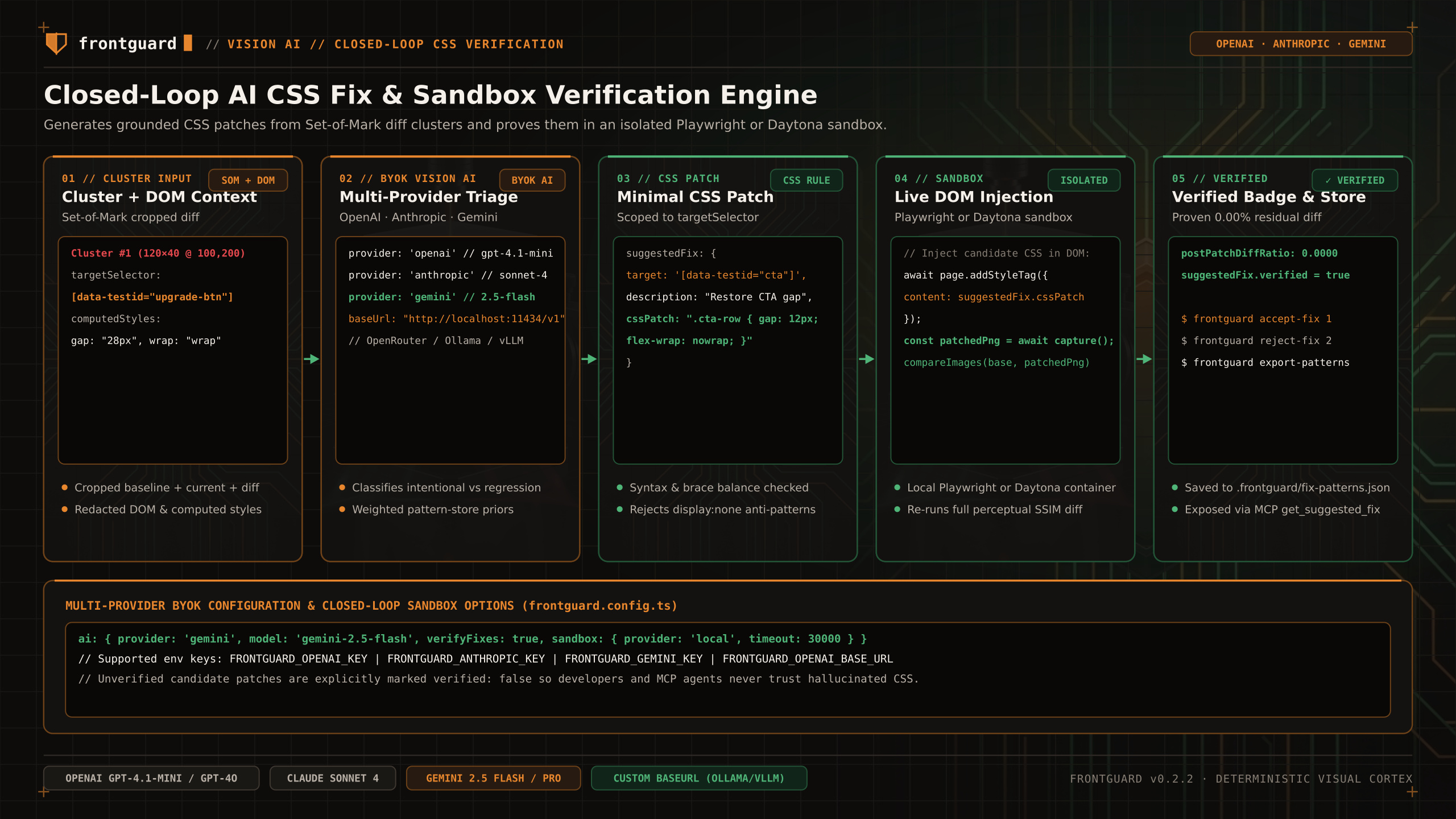
Frontguard starts with deterministic pixel comparison. Optional model-assisted analysis can classify changed screenshots and explain its output, but published validation has not measured model accuracy.
- +Name the real problem: false positives, flake, muted channels.
- +Quote the classifier: "intentional change, not a regression."
- +Lead with the local MIT CLI and optional BYOK analysis; earn trust with facts.
- +Publish real numbers, including where it gets things wrong.
- −Promise "zero false positives" or "100% accuracy."
- −Call it magic, autonomous, or a silver bullet.
- −Bury that AI is optional and runs on your own key.
- −Shout in title case or pile on exclamation marks.
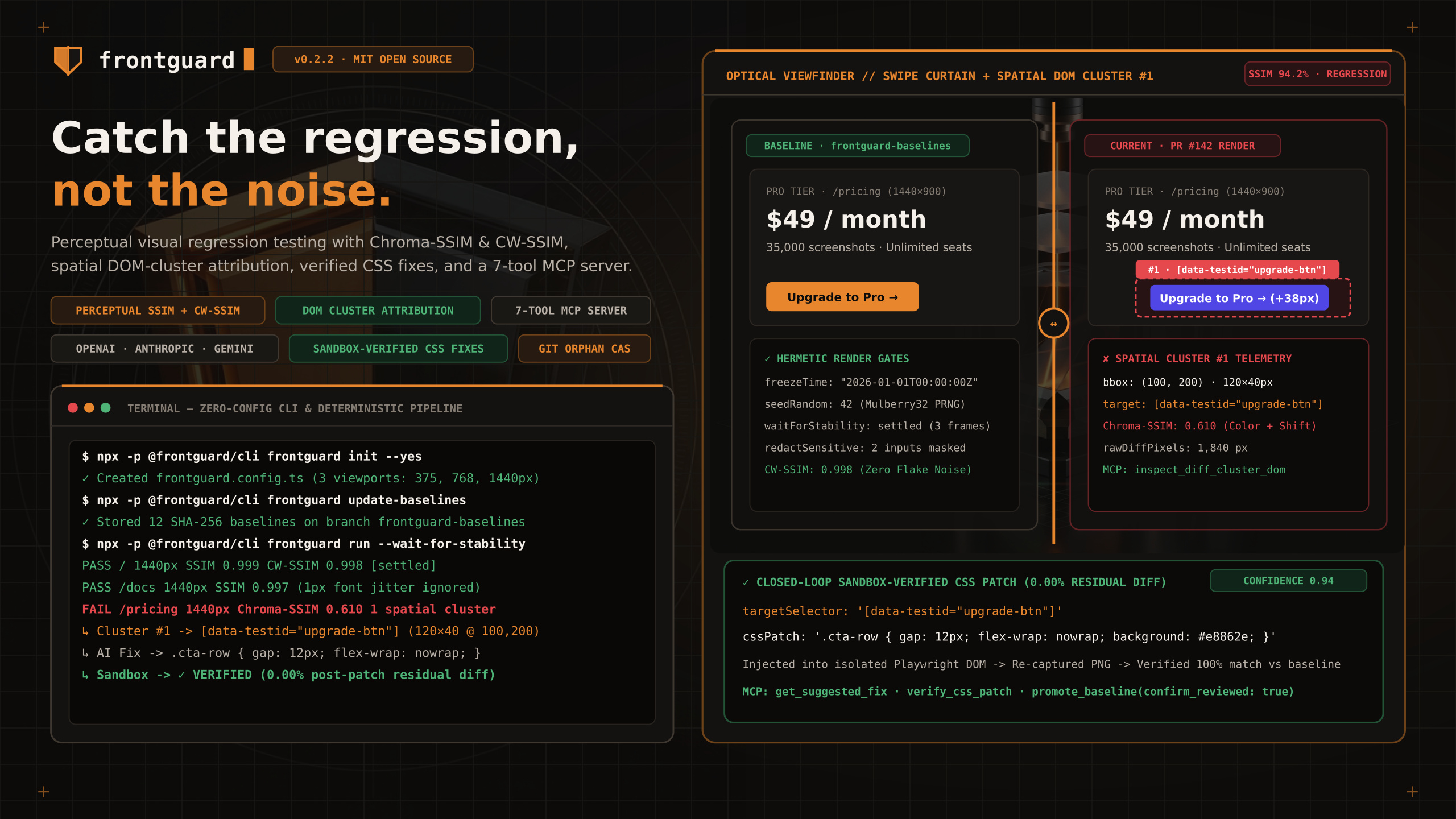
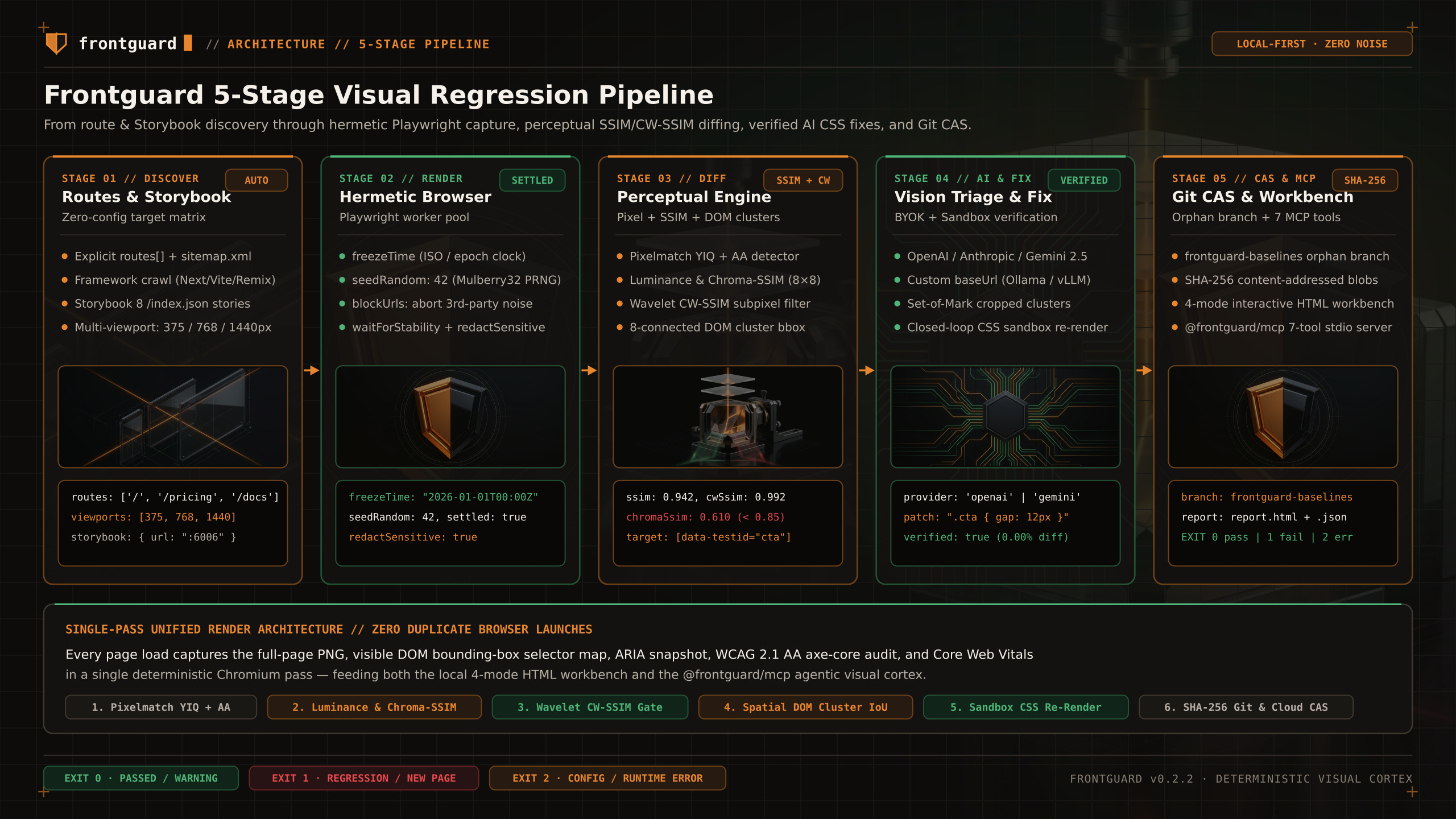
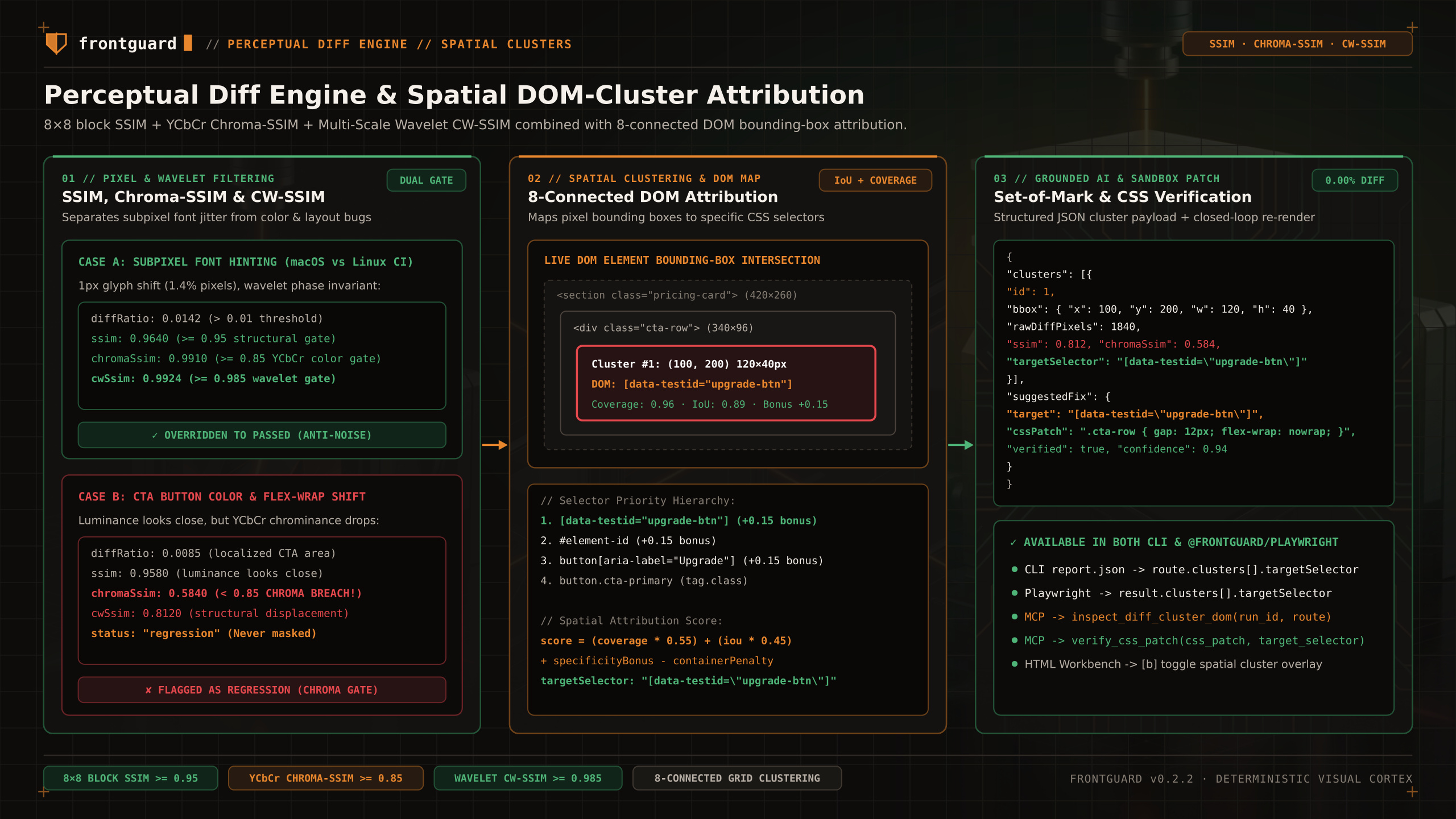
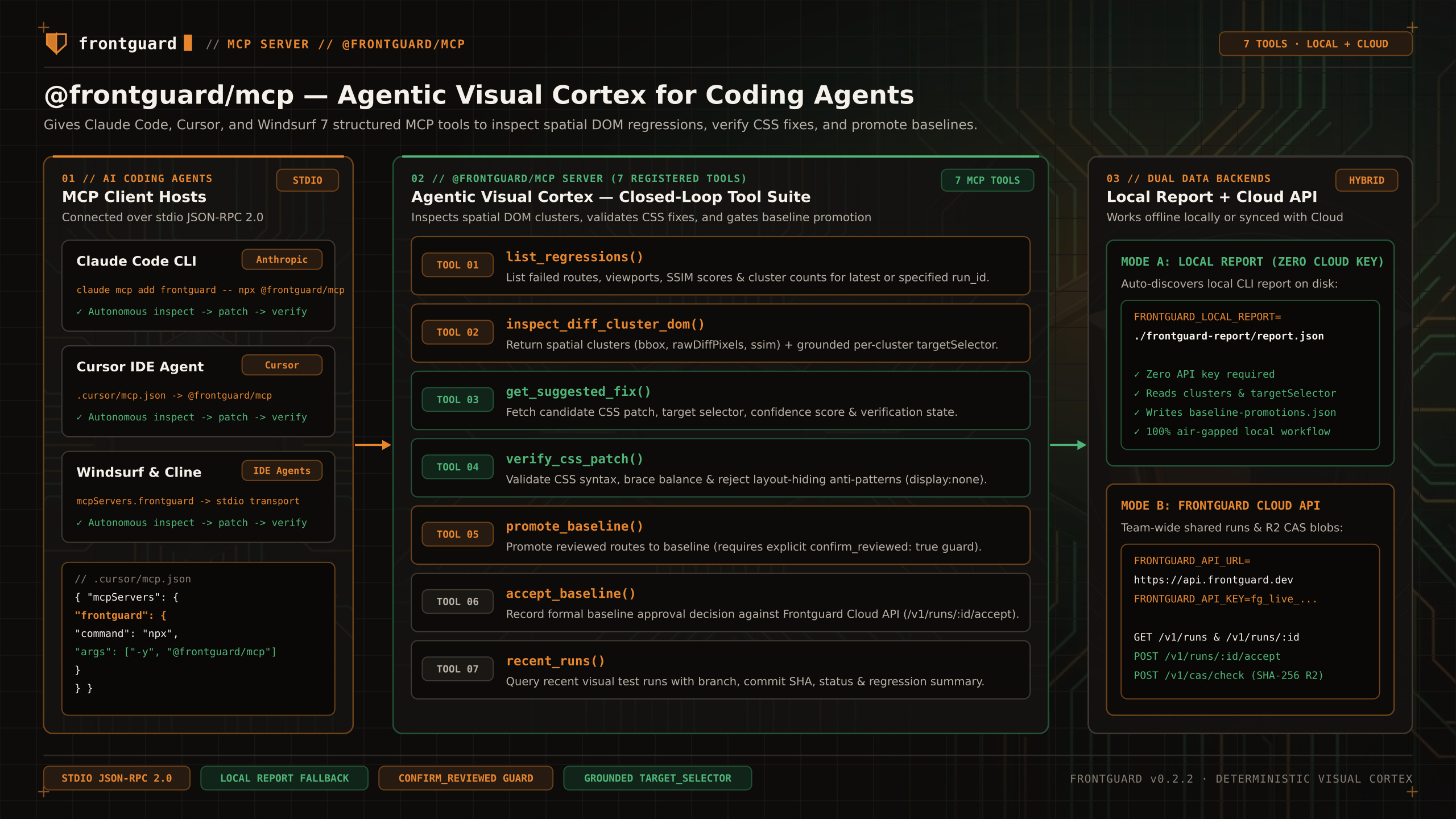
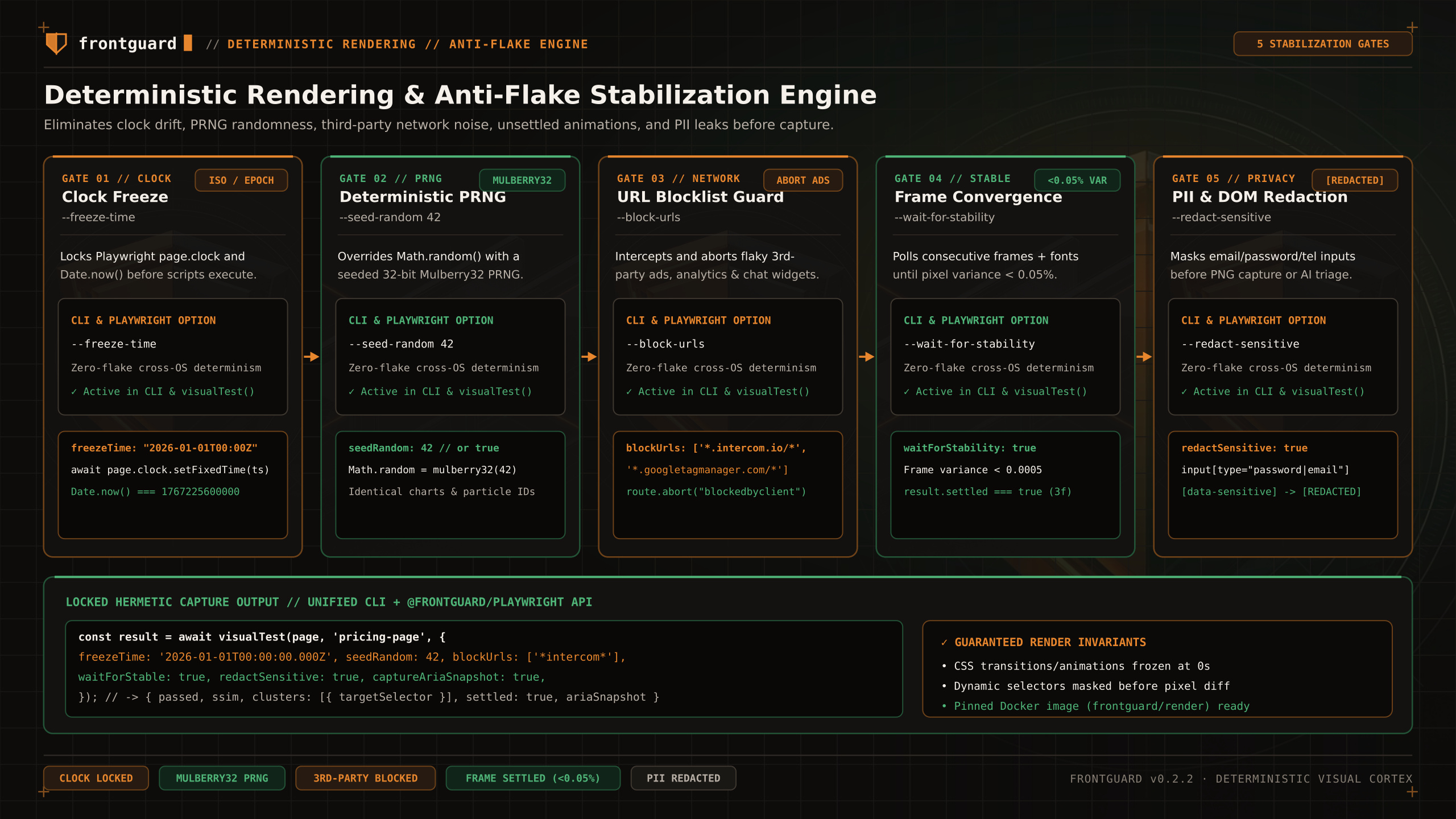
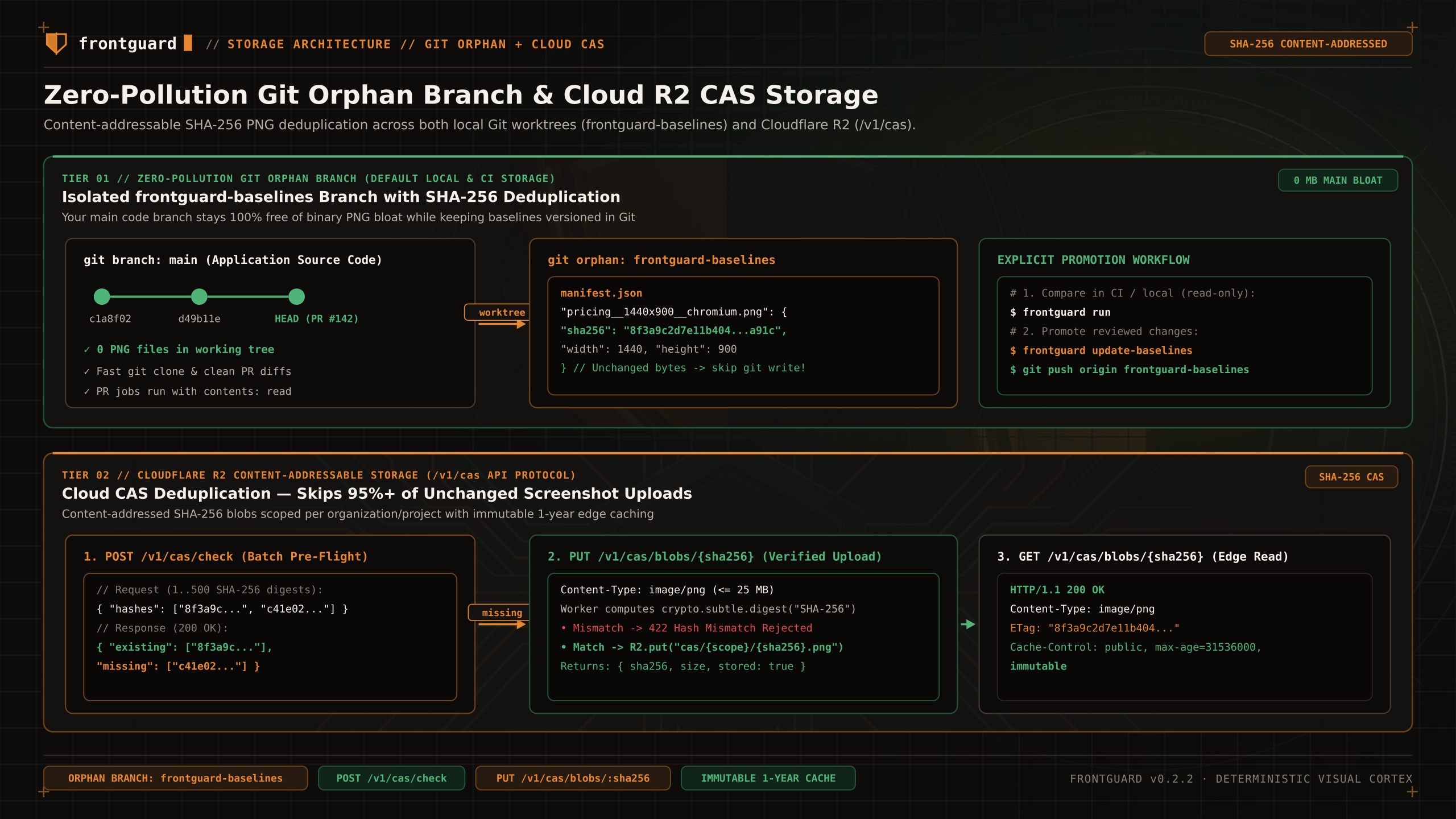
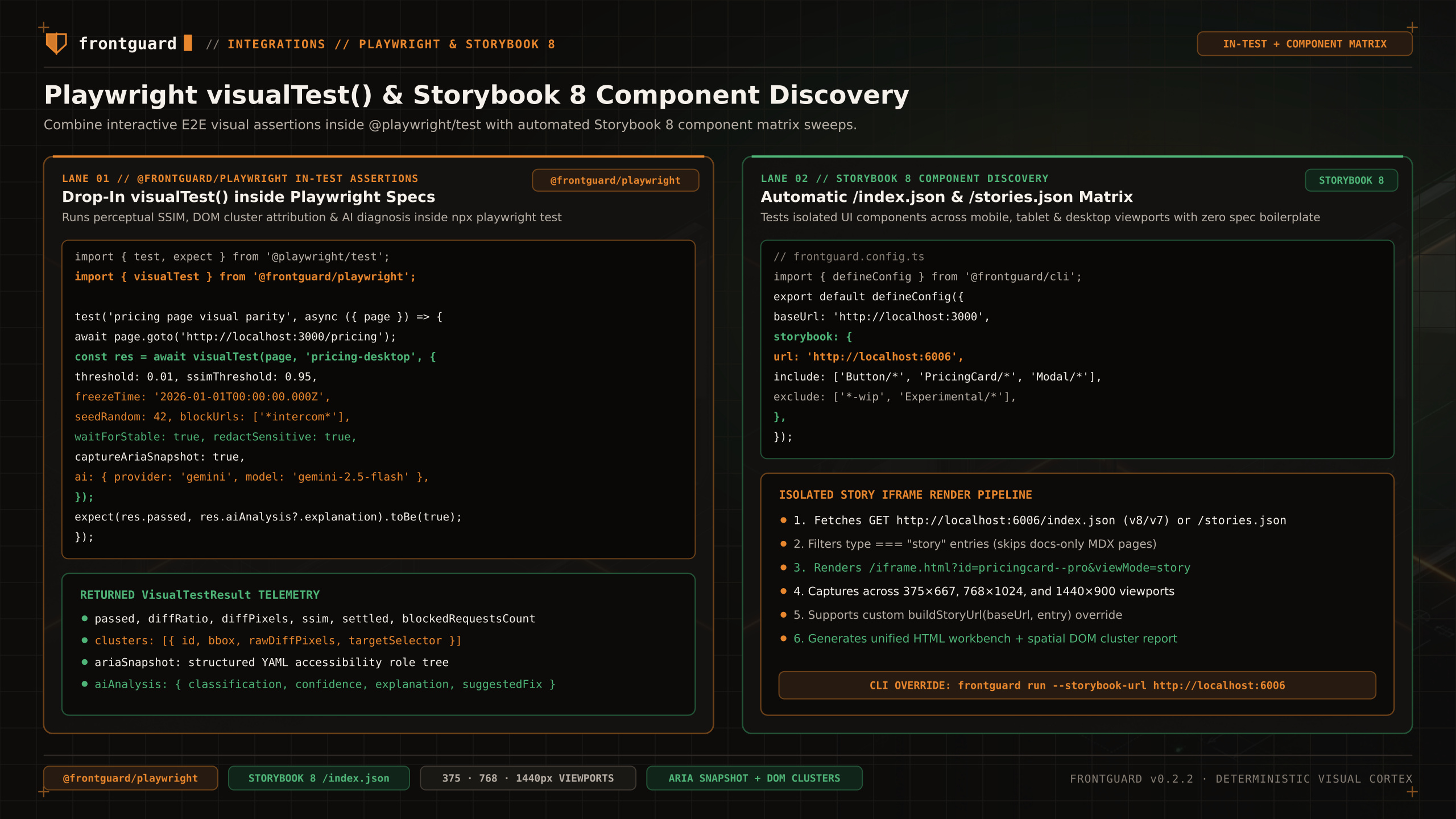
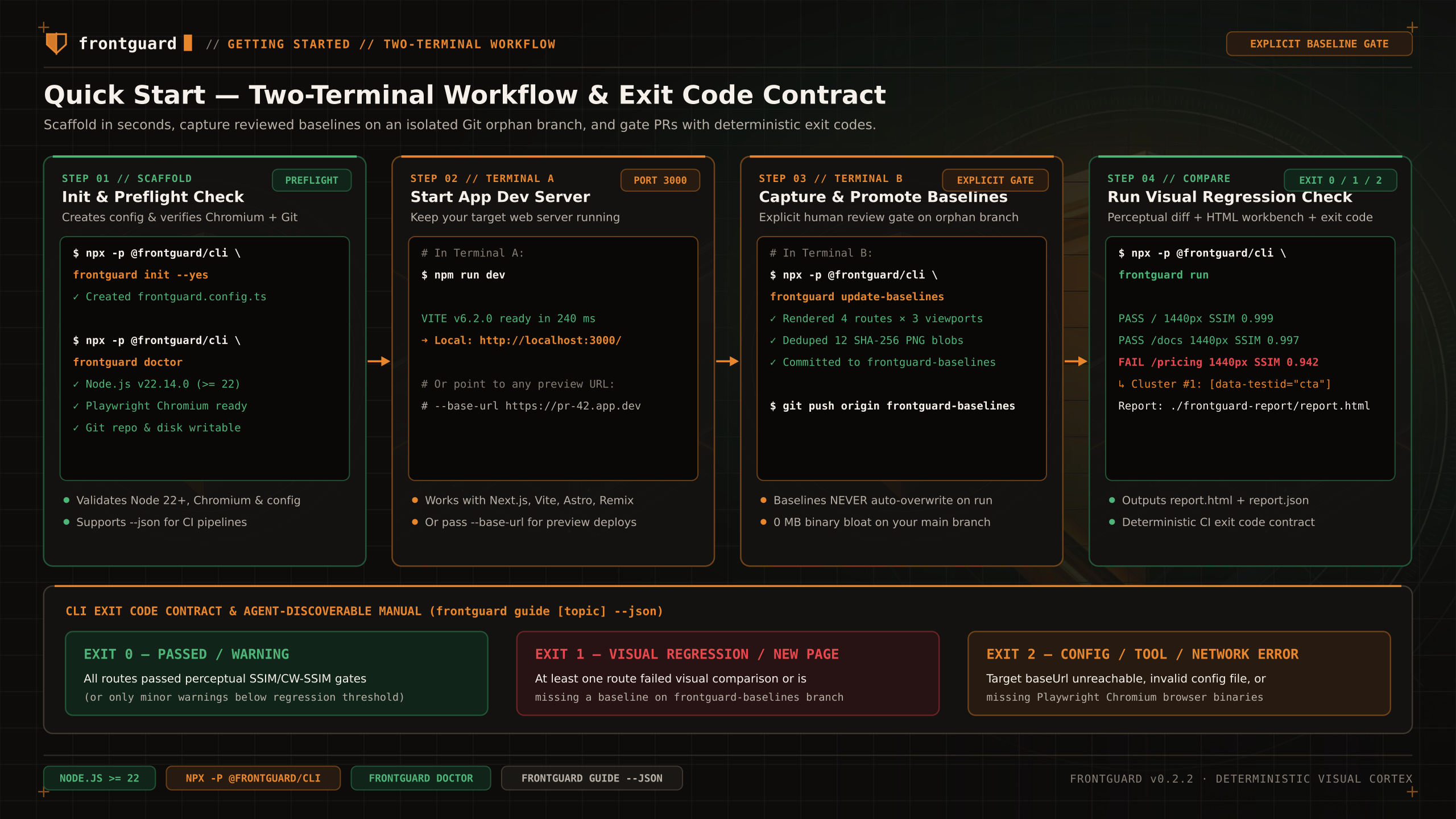
06 / VISUAL ARCHITECTURE & SOCIAL ASSETS